


Permission to go: Ben Warner on founding Electric Twin, 10DS and his take on Burnham’s MoG changes
 Ayesha Peacock
"We're not ready," David Halpern, Founder of the Nudge Unit, wrote in a notebook during a Sage meeting in the spring of 2020. Ben Warner, then Chief Data Advisor to Boris Johnson, reached for his pen, struck through 'not ready' and replaced it with "F***ED".
Six years, four Prime Ministers, and one global pandemic later, Warner has moved from leading the UK's COVID-19 data modelling efforts that triggered the first national lockdown to co-founding AI firm Electric Twin, where he is working towards a transformation in our understanding of human behaviour.
Mechanism to murmuration
It's hard to imagine a more stark lesson in the importance of understanding human behaviour than predicting how an entire nation will respond to an unprecedented curtailment of its freedoms. The rapid growth in the sophistication of AI tools, led by increases in data volumes and compute power, is opening up a new era of human understanding, Warner believes.
“If you look at the biggest problems we have today, mental health, obesity, climate change - they're all about changing people's behaviour.
“Had I been in 18th-century England, I won’t pretend that I would have predicted the railways, but as these tools get more advanced, there will be a shift from mastering the complicated to understanding more complex problems.”
He illustrated the distinction between complicated and complex problems through an analogy.
“The murmuration of swallows is due to the complex interaction of multiple swallows, you put a swallow on its own, it doesn’t fly the same way, it will just fly in a straight line.”
It is the builders behind the AI Revolution that are powering this paradigm shift in human understanding - from studying how people act in isolation to modelling how their outlook and behaviour is affected by complex stimuli. For Warner, this technological advancement will propel social sciences from the Dark Ages to a Renaissance.
Synthetic audiences and the future of policy-making
Electric Twin builds AI models trained on real data that replicate, with high levels of accuracy (96%) and 100,000 times faster than traditional surveys, how a population would respond to a given question or scenario. For the UK Government, that would mean fundamentally transforming how to develop and iterate policy, along with swathes of downstream bureaucratic processes.
The world's first institution dedicated to applying behavioural science to public policy was the Behavioural Insights Team (BIT), founded by David Halpern during the Cameron Administration and commonly known as the ‘Nudge Unit’.
BIT’s use of experiments and quantitative data to inform policy was an “incredibly valuable” starting point, according to Warner. However, without synthetic audiences, the ability of policymakers to experiment and test recommendations remains constrained.
"How can government use synthetic audiences? In the exact same way Nesta can. DESNZ could explore policy ideas, looking for both how they can maximise their impact and test the second-order effects. Think about the Treasury; they don't get to test their policy-making because they affect markets, so they just have to land things and hope they work."
Reflecting on his time in the pandemic, Warner tells us how, during the first lockdown, his team was able to use emergency procurement measures to secure survey data on public behaviour, but by the second and third lockdown those emergency mechanisms had been blocked. "Most civil servants are forced to make decisions with a lack of evidence. I worked on the Prime Minister's 10 Point Green Industrial Revolution, and there were so many questions where we just didn't have any survey data. The answer was always: “no, we don't have time to get it”. By the time something gets to Number 10, you've only got a limited window to reflect and give feedback."
Whitehall is a hard sell
On the surface, Electric Twin seems like a model company to support the UK government. As well as their synthetic audience products having clear use cases for civil servants, many of their employees have had high-stakes civil service experience - Warner's co-founder, Alex Cooper, served as Director of Mass Testing at the Department for Health and Social Care, and the two met while coordinating the government's pandemic response. "I really desperately want to be able to help government,” he told me. “I want the UK to be a thriving country where people feel optimistic about the future and their lives are improving. If Electric Twin could improve thousands of people's lives, why would we not?"
As it stands though, the difficulty of selling into Whitehall is too significant to paper over.
"Selling to government is about getting onto procurement frameworks and filling in procurement documents; there's almost a whole industry just to get in, which is a real shame," Warner said. "What we've done within our procurement framework work is we've lost our trust in our civil servants to make good decisions with their budgets."
Like the efforts to push through emergency procurement for the survey data in the first place, which led to the UK being a world leader in vaccine response, Warner tells me that change is possible when we trust people to build relationships and deliver value, and that bureaucracy is not inevitable.
The recent appointment of Simon Case, Former Cabinet Secretary, to the Electric Twin Board speaks to the ethical weight of building tools that model human behaviour at scale. On the Nudge Unit for instance, researchers at the Oxford Internet Institute, have warned that government’s use of behavioural science to influence citizens has the potential to "diminish choice" if those ethical questions are not addressed from the outset. On ethics Warner said, "when you're talking about understanding humans, it is important that you realise that you are talking about something that people care deeply about. You're always thinking about the ethics of things." Case's value, he argues, lies in his experience of having "sat in the room with the Prime Minister and had to understand some very hard choices, when it’s not a hypothetical or textbook exercise."
If the new capabilities of AI will continue to drive a Renaissance in social and behavioural science, it will be companies like Electric Twin and people like Warner, Cooper and Case that will shape its legacy.
Permission to succeed
The Vaccine Taskforce model is easier to admire than replicate, if former Chief Secretary to the PM, Darren Jones, being unable to see through the roll out of the Taskforce model across government during his tenure is anything to go by - but it does prove civil servants can achieve the astounding when not burdened by process. Warner believes 10DS (the Number 10 Data Science Unit - it’s a pun) also shows what can happen when talent is given the permission to succeed.
Established by Warner in 2020 in his role as Chief Advisor on Digital and Data to the Prime Minister, 10DS was built to ensure the Prime Minister had access to the best available evidence. In Warner's words, he founded it to “make Downing Street a more intelligent customer around technology, data and analytics”.
He continued, "The Number 10 Innovation Fellowship was a small pilot of around eight people when I was there. Now it's a really powerful organisation with real momentum. The best civil servants trying to solve hard problems could talk to people they trusted, using the proper language and complexity, and those people also had the trust of Number 10 to act as that trusted translator. That has worked really well."
The lesson Warner draws from this is that getting the most out of high-performing officials requires a culture of trust and permission to deliver outcomes. "We have amazing civil servants, but too often we look outside rather than backing our own people to be great.
“Rather than adding another layer, another delivery unit, another process to check on processes, let's back our people to be ambitious and believe in them. The Number 10 Innovation Fellowship works because you put great people in and then put a title on it that says: you have permission to go."
A message to you, Andy
Since the interview, it has been announced that the Department for Science, Innovation and Technology will be merged between the Department for Business & Trade, The Department for Media, Culture and Sport and the Office for the Prime Minister and the Cabinet Office (OPMC). The response so far has been mixed, but at least for the OPMC, Burnham may find an unlikely advocate in Warner.
When asked what he would say to the new Prime Minister, Warner said: "I don't think we've built on the 10DS success sufficiently. Moving Government Digital Service to DSIT was a mistake. If you believe technology and science sit at the heart of growth, it shouldn't sit in a small department with no levers of power.
“Splitting innovation away from the problem is a mistake. If I were in government, I would be bringing innovation, science, and technology to the heart of government, not carving them out separately."
Should the innovation currently held within DSIT be redistributed to the officials who “own the problems”, Warner is clear that ambition on AI must not be lost in the process. "It's really important we're supportive of all the AI initiatives in government; very good people are working hard on these things. But we can be positive about those initiatives while also pushing for more ambition.”
“Someone once said to me: you don't jump a chasm in two leaps. Google, Facebook, Microsoft, they're spending billions. If we're spending millions, we should be asking: is this ambitious enough?"

.jpg?width=600&name=Heron%20House%20(1).jpg)
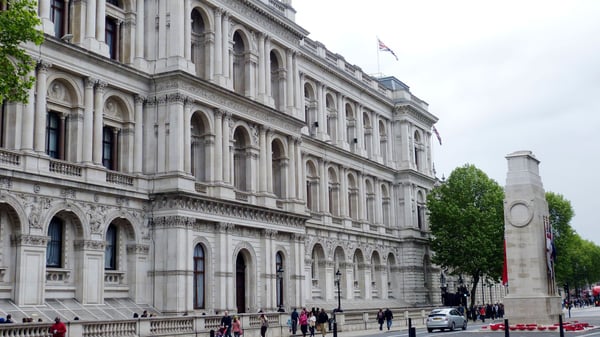
.jpg?width=600&name=Whitehall%20(1).jpg)