

What does No.10 North mean for civil servants?
 Maya Sgaravato-Grant
.jpg?width=1920&height=1080&name=Heron%20House%20(1).jpg)
When Andy Burnham inaugurated the new No 10 North, he called it “the best day of [his] life”.
Housed within the red brick walls of Manchester's Heron House, the “government’s new situation room for growth” is presented as heralding an era of place-based governance, in which more power is devolved to the UK's regions.
However, for No 10 North to become more than a new government office, a significant rethinking of how the Civil Service develops policy, works across departmental boundaries and builds careers is required.
We spoke to three experts about what No 10 North could mean for civil servants, and how it could reshape the relationship between central and local government.
A different way of making policy
For Patrick Diamond, Professor of Public Policy at Queen Mary University of London and Chair of think tank Policy Network, No 10 North seeks to address one of Whitehall’s longstanding weaknesses in its relationship with local government.
He said: “The current Whitehall setup is not very well geared towards making devolution effective for several reasons, one of which is that mayoral combined authorities are having to deal with multiple Whitehall departments, which is often confusing and creates lots of operational problems.”
No 10 North acting as a “single point of contact” between central government and combined authorities could simplify those relationships.
More fundamentally, however, Diamond argues that the “key purpose” of No 10 North is to ensure that civil servants and departments see beyond departmental silos, instead “treat[ing] place as the key lens through which they see policy.”
This means considering how transport, housing, health, employment and skills interact in people's everyday lives rather than treating each as a separate policy area.
This focus is one that Burnham developed through his time as mayor of the Greater Manchester Combined Authority, explained Andy Westwood, Professor of Public Policy, Government, and Business at the University of Manchester.
He said: “In Whitehall you typically end up thinking about those things as silos of activity - a GP or transport decision, or a skills and education policy - whereas as a mayor at a local level you're much more likely to see the connections between them and how they how they support people's daily lives, or how the silos between them get in the way”.
For civil servants, success would increasingly depend on understanding how policies combine to shape outcomes within a locality rather than delivering individual departmental objectives.
Greater collaboration as the norm
While implementing an approach of this kind is challenging at the local level, it is even more difficult in central government. As mayor of Greater Manchester, Burnham saw collaboration - with local stakeholders, businesses, trade unions, NGOs, civil service organisations, charities, and importantly within the Combined Authority itself - as fundamental to effecting change
However, Diamond pointed to how incentives work in the Civil Service, the way in which ministers are held accountable for their individual actions rather than their collective work, and how departments are required to compete with each other for resources for the Treasury, as factors which inhibit this.
He said: “If you really want civil servants across functions to collaborate, you probably need to do more to reduce the departmental boundaries or silos, as they're called, between departments.
“In the last 40 years we’ve tried multiple initiatives to try and get departments to work together… but it rarely works, if we're honest. So I think they're going to have to, and I think they intend to, try something more radical.”
He argued that the “logical conclusion” of this line of thinking would be the abolition of certain departments. This abolition of DSIT in the first week of Burnham's premiership could
Career development could change too
The implications may not stop with organisational structures. Andy Westwood asks if the restructuring of the Civil Service could also lead to a broader cultural shift, changing the pathways to success in the sector.
He asked, “Would you construct something like the fast stream, so that you had a placement that was always in a devolved body, whether that be a local council, a locally based public service or a mayoral combined authority? That would seem to me to be a good thing.
“But equally you might want to kind of construct career development around people's experience [working with local communities].”
Experience of working directly with local communities could become a more important marker of leadership potential alongside traditional Whitehall experience.
Building on existing reforms
While No 10 North is certainly a step change from previous devolution drives, it is not unprecedented for government to locate key operational and policymaking functions outside of London.
In that sense, No 10 North is partially building on existing work, such as the achievements of the Places for Growth initiative.
Dr Simon Kaye, Director of Policy and Research at think tank Re:State, said that Darlington Economic Campus in particular is evidence of the usefulness of locating policy teams outside London.
He said: “The pro argument is very clear: it's good for cognitive diversity, it's good for alternative perspectives on big questions.
“If you try and bring things outside of London, you will necessarily make some headway against some of those challenges, which are sort of classic challenges for the way the civil service works. And I think you've seen in Darlington that that can happen.”
However, both Kaye and Westwood argue that Darlington also reveals the potential challenges which could come with establishing a No 10 North in light of the extent to which executive functions have been concentrated in London.
Kaye described civil servants in Darlington spending their days on online calls with colleagues in London, while Westwood underlined how Rishi Sunak had never ended up spending as much time in the campus as he pledged, due to the requirements of his work calling him to London.
Westwood said: “The pull to the centrifugal force, if you like, is very strong, and it's going to take a very determined and sustained push to begin to change that.”
Changing where people sit is not enough
One way to start changing that would be by creating more momentum around No 10 North. Kaye argued that the success Darlington Economic Campus has had came from it committing to taking a "critical mass of different disciplines, departmental interests, capabilities" out of London, while Westwood suggested that the presence of a number of MPs from near Manchester in the Cabinet may get the ball rolling on No 10 North being a place where important decisions are made.
In other words, for No. 10 North to represent a genuine shift, officials based outside London would need to have the relationships, authority and influence to shape policy rather than simply contribute to discussions led from Whitehall.
A step towards this has already been seen, with Burnham, education secretary Lucy Powell, and communities secretary Angela Rayner - as well as Minister for the Cabinet Office Louise Haigh - committing to working there regularly.
In reshaping its relationship with local government, the Civil Service must also ensure that it finds an appropriate balance between national priorities and local autonomy. This is especially important when in cases where central and local government disagree on policy, as Diamond explained.
He said: “There is a risk of a contradiction between saying ‘we're going to have a partnership’, but then the partnership is only one way, where the centre says what the priorities are and the local areas follow.
“There has to be some scope for places to pursue their own objectives, and that might mean that they choose to focus on different things that central government isn't necessarily so interested in.”
Ultimately, interviewees argued that No 10 North should be judged less by where it is located than by whether it changes how government works.
For civil servants, a successful place-based model would mean stronger relationships with devolved government, more cross-department collaboration and career pathways that value experience beyond Whitehall.
Without those wider reforms, No 10 North would risk becoming another regional office. With them, it could represent one of the most significant changes to the way the Civil Service develops policy since devolution began.
|
Five things a No 10 North could mean for Civil Servants
|
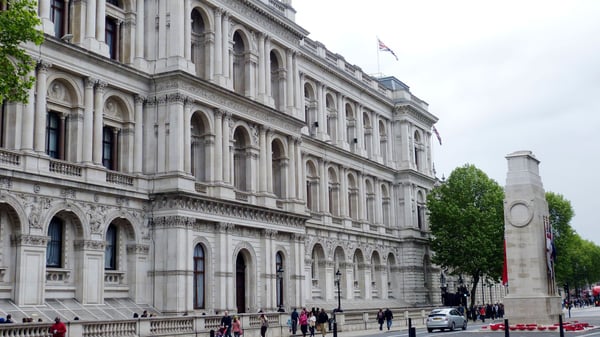
Featured Image Credit: Anthony O'Neil via Wikimedia Commons, licensed under CC BY-SA 2.0.


.jpg?width=600&name=Whitehall%20(1).jpg)