


Monthly recap: Digital transformation and service delivery
 Maya Sgaravato-Grant
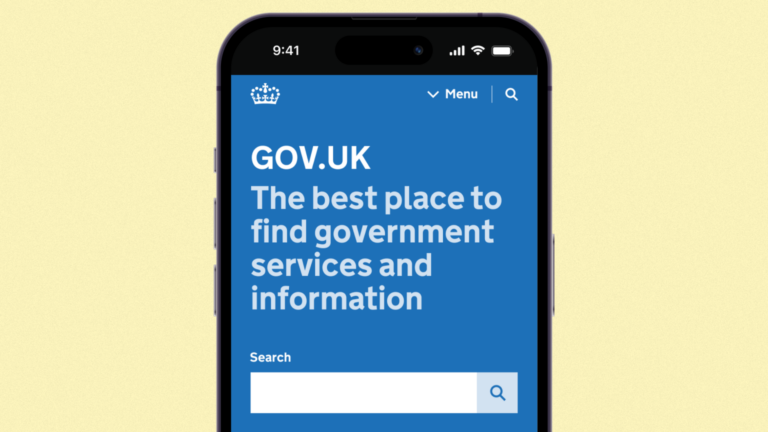
The way citizens interact with the public services is rapidly evolving. From increasingly streamlined ways of accessing government services, to new forms of support for disabled people seeking work, to new ways for students to prove their age when buying a pint on a night out, find some of this month’s major updates in our citizen experience round-up.
Passkeys rolled out across GOV.UK One Login
Passkeys are now being rolled out for GOV.UK One Login, giving users a “faster and more secure” way of accessing government services.
People will now be able to use a fingerprint scan, Face ID, or a PIN, as opposed to simply a password, to access the site, in a move which the government says helps users to log in up to eight times faster, protects them from cybersecurity threats, and saves the British taxpayer nearly £600 a day in SMS costs.
This follows a trial in which more than 300,000 users successfully switched to passkeys, with the functionality now available for the service’s 23 million users.
The National Cyber Security Centre spoke out in support of the measure, stating that passkeys are more secure than passwords as they can’t be intercepted, stolen, or reused.
While the use of passkeys is optional, nearly one in ten GOV.UK One Login sign-ins are now made using the feature. The government has emphasised that any biometric data or PIN information remains on an individual device, and is not seen or stored by the GOV.UK One Login.
This comes as the number of government services available through GOV.UK One Login continues to expand, with it having reached the milestone of 250 services last month.
Digital proof of age introduced for alcohol sales
Young adults in England and Wales will now be able to use digital ID when buying alcohol as the government grants licensed businesses the right to accept digital proof of age.
Customers at pubs, off-licences, music venues, restaurants, and other participating licensed premises can now prove their age by downloading software from third-party providers onto their phone.
This software could then generate a QR code to be scanned by a staff member, or allow the user to tap their phone against a compatible reader.
The government says the move will improve privacy and security for young people - as digital proof of age often does not display sensitive information such as names or addresses - as well as reducing the risk of fraudulent identification going undetected. Customers are still able to use physical identification if they prefer.
The move follows the results of a 2024 Government consultation, which saw 72% of participants support the acceptance of digital IDs for alcohol purchases.
Thousands move into employment through disability employment service
An employment support service for those with disabilities, long-term health conditions, or complex barriers to employment has seen over 4000 people find work, according to official data.
New figures from DWP show that the “Connect to Work” programme, which was launched in England and Wales last year and fully rolled out this July, has so far had 4100 participants move to employment.
Rather than requiring participants to access support in a fixed location, the voluntary programme allows participants to access flexible one-to-one support from specialist advisors in environments suitable and convenient for them- from GP surgeries to cafes or parks.
It is backed by over £1 billion in government funding, and is currently providing support to 25,000 people, with the government aiming to aid 300,000 people through the service by the end of the decade.
This comes as the government seeks to reduce the number of people out of work due to ill-health, which currently stands at 2.7 million.
Overall, these developments highlight a broader shift in how public services are being designed and delivered.
From new approaches to digital identity and authentication to more flexible, personalised support, the focus is increasingly on making interactions simpler for users while improving security, reducing costs and reconsidering how and where services are delivered.

.jpg?width=600&name=Channel%20Shift%20(1).jpg)
.png?width=600&name=Citizen%20Services%20Panel_%20Honey%20Dacanay%20+%20Ana%C3%AFs%20Reding%20+%20Eddie%20Copeland%20-%20600%20x%20400%20(1).png)