

Governing AI at the speed of adoption
 Maya Sgaravato-Grant

While much of the conversation around AI focuses on its potential to improve productivity and transform public services, the speed at which the technology is advancing is creating unprecedented challenges for which organisations and wider society must prepare.
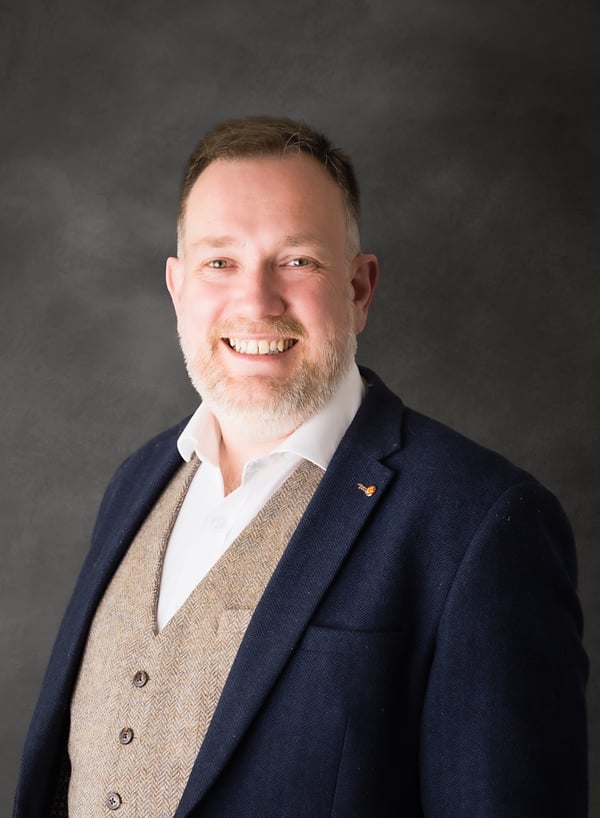
That was the central message of the speech given by Tony Fergusson, Chief Information Security Officer in Residence at Zscaler, at Government Transformation North.
In a presentation entitled “Governing AI at the Speed of Adoption”, Fergusson outlined the importance of being aware of and confronting these challenges while remaining optimistic about the future.
Preparing for an evolving cybersecurity landscape
Fergusson identified three immediate areas of concern with respect to AI, which he likened to three successive waves of a storm.
These comprise the erosion of trust through AI-generated misinformation and impersonation, the growing ability of AI models to identify software vulnerabilities, and the risks associated with increasingly autonomous AI agents, especially as organisations increasingly deploy AI agents with access to internal systems and the autonomy to act on their behalf.
Beyond these immediate challenges, he warned that there are further “waves” on the horizon which organisations must not lose sight of, such as a negative environmental impact, a greater digital divide prompted by uneven accessibility, and changing employment patterns. While AI could increase demand for workers in some industries, it could reduce demand in others, making rapid reskilling increasingly important.
He also highlighted potential problems arising from insufficiently sovereign AI and the potential impact of AI on democratic processes in places where control over information is concentrated in the hands of a few.
Anticipating these changes, rather than responding to them once their consequences become apparent, was a central theme of Fergusson's presentation.
Creating time to address emerging challenges
Another of Fergusson's central arguments was that the pace of AI development is limiting the time available to understand and address its associated risks. He argued that international competition to develop more advanced AI could accelerate the emergence of challenges that society is not yet equipped to manage. Slowing the pace of development, he suggested, could give society more time to prepare for and address these risks.
However, despite these challenges, Fergusson encouraged attendees to adopt the mindset of an “apocalyptic optimist” - remaining optimistic about the future while acknowledging and actively confronting the risks that accompany technological progress.
“We should be optimistic about the future, but we can't ignore some of the things in front of us,” he said.
Rather than viewing the trajectory of AI development as inevitable, Fergusson emphasised that humans have the ability and responsibility to influence it.
“The storm is here, let's batten down the hatches, but please let's not forget this is a human-made storm, and all of us here, everyone can shape this together.”