

Reflections from Government Transformation North: Progress, challenges and what comes next
 Sam Parker
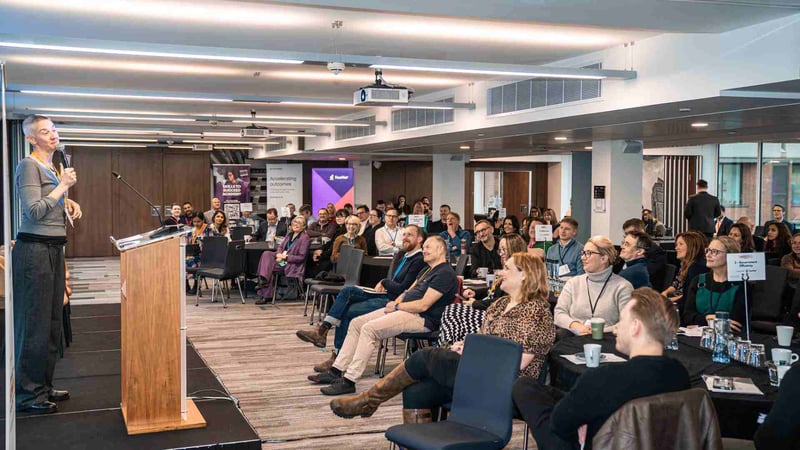
Last month, I co-hosted a discussion at Government Transformation North in Manchester, a gathering that brought together over 200 senior leaders from across the public sector to share insights, accelerate transformation, and reimagine the role of the modern state. The event, now in its sixth year, and for the first time in Manchester, has become a vital forum for connecting strategy with practice, and this year’s edition was no exception.
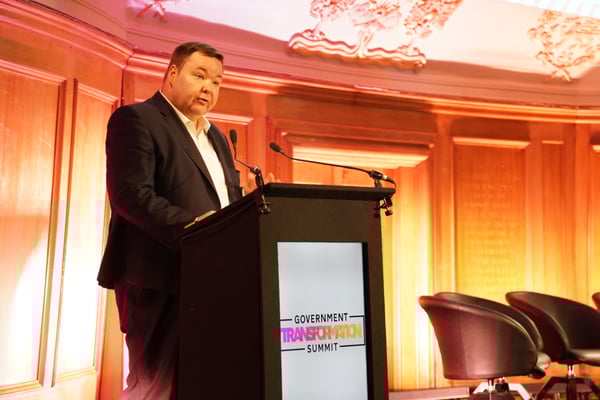
The day opened with an energetic keynote from Janet Hughes, Director General for Civil Service Reform & Efficiency at the Cabinet Office. Hughes (pictured above) set the tone by referencing the Fulton Report of 1968, reminding us that many of the challenges facing the Civil Service - such as the need for better collaboration, faster delivery and more citizen-centric services - are as relevant today as they were decades ago.
Yet there was a palpable sense of optimism: Hughes’s vision for a leaner, more responsive Civil Service better aligned to citizen needs, resonated with the audience and underscored the event’s forward-looking spirit.
Key themes and takeaways
Several themes emerged across the day’s sessions:
- Appropriateness and outcomes: Are we solving the right problems? There was strong agreement on the need to define clear success and failure criteria from the outset, ensuring that digital initiatives are grounded in real-world impact rather than technology for its own sake.
- Data foundations: Without a solid foundation of well-governed data, success with generative AI will be hard to achieve. Data interoperability, sharing and culture were recurring topics, with many calling for better frameworks to break down silos and unlock insights.
- Becoming comfortable with discomfort: To get the most from new technologies, teams need to become comfortable being uncomfortable. This means embracing experimentation, learning from failure and leaning on robust service design to banish anxiety.
- Responsible scaling: As AI moves from pilot to production, embedding transparency, governance and human oversight from the start is essential. The environmental cost of AI was also raised, with calls for a standardised sustainability metric.
- Collaboration and reuse: The event reinforced the importance of collaboration and reuse across departments as key to turning good ideas into real outcomes. The roundtable format itself was a testament to the power of open, honest dialogue.
The broader context: Why this discussion matters
The event’s context is important. Despite £26 billion spent annually on digital initiatives, almost half of public services remain undigitised and public satisfaction has dropped from 79% to 68% over the past decade. The need for transformation is urgent, not just to save money but to deliver better outcomes for citizens. The summit’s streams - Digital Transformation, Citizen Services, Data, and Artificial Intelligence - reflect the breadth of the challenge and the ambition of those tackling it.
Looking ahead: From insight to action
For me, the biggest takeaway is that transformation is not a one-off project but an ongoing journey. It requires talent, leadership, and above all, a willingness to collaborate and learn. Key steps to take include:
- Enforce interoperability and data standards in AI by building on existing initiatives, highlighting recommended tools and models and funding proven solutions for cross-government use.
- Allow departments to create specialised tools as long as they integrate with the broader system.
- Create practical, ready-to-use AI cases and toolkits for departments, as leaders seek clearer coordination and accessible resources beyond general guidance like the AI Playbook.
- Make openness standard practice in data and AI. Although there are positive examples, a defensive culture still prevents effective sharing and innovation.
The energy and honesty on display at Government Transformation North left me optimistic about what’s possible and determined to play my part in making it happen.