

Opinion: Why true transformation requires a public sector culture shift
 Neil McIvor

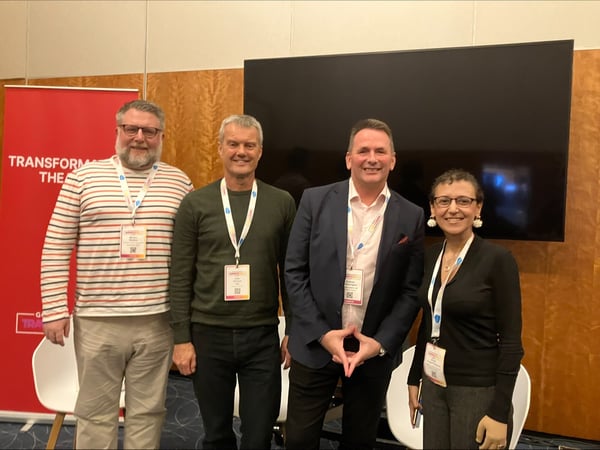
In June I had the pleasure of co-hosting a roundtable at the Government Transformation Summit 2026 discussing how public sector leaders are moving beyond legacy systems to build joined-up, outcome-first government that aligns platforms, data and people around shared outcomes. This article reflects on that discussion and explores what true transformation will require.
If the public sector truly wants to drive transformation, rather than simply digitalise existing services, this will require a significant culture shift. During my 23 years as a civil servant, I often saw the contrast between the ambition to drive transformative change and the reality for hard-working teams who had already experienced decades of change programmes, many of which delivered little meaningful difference..jpg?width=180&height=180&name=Neil%20McIvor%2c%20esynergy%20(1).jpg)
This often creates a culture that feels resistant to change. To overcome it, leaders need to connect the strategic vision with a simple narrative around how these transformations will improve outcomes for citizens and businesses, and how it will make it easier for public servants to do their jobs quickly, effectively and with greater impact.
Technology can be an enabler or an anchor that holds back real change. The hardest part is not the technology, it is not even the data foundations, which are essential to get right in the new world of AI-enabled delivery. The hardest part is people. Helping people understand why the change matters, who it matters to and how it will make a real difference is what will make transformation feel different this time.
Are we really undertaking user-centred design or are we stuck in ‘product-centred user-design'?
We heard at the summit that focusing on the outcomes drives real transformation, whether that is reducing the tax gap, improving attendance in schools post COVID, cutting waste, or enabling staff just to do their jobs more effectively and efficiently.
The digital revolution in central and local government has helped drive a positive shift in mindset. As I walk the corridors of Westminster ‘user-centred design’ is a phrase I hear often. But are we really undertaking user-centred design or are we stuck in ‘product-centred user-design’ where we focus on the needs of a product rather than the holistic needs of the person using the service?
Take a farmer. They do not care how government has divided accountability. They care about getting the right support quickly, whether that is moving livestock, applying for a grant for hedgerows or solar panels, reporting pollution, or claiming the right tax relief.
But we make it hard for the farmer, when we do not design around their holistic need.
Government still needs to invest in understanding the ‘science of data’
That is why we need to think differently about the foundations we are building. Data needs to be treated as an infrastructure layer, not as something locked inside individual services. We also need modular services and reusable components that can connect across organisational boundaries, rather than continuing to build unrelated services that do not interact with each other.
This is where AI becomes both a major opportunity and a major risk. It has the potential to transform public services, but if applied within existing siloed delivery models, it could create even bigger barriers.
But as we heard at the summit, AI is not the starting point. Good data is.
Government still needs to invest in understanding the ‘science of data’: how data moves through systems, how it should be modelled and architected, and how the right platforms can improve outcomes while reducing costs.
Data is not free! We often assume that the data we need already exists, and that it sits in the systems where we expect to find it. However, this is not always the case. We need to better understand the trade-off between turning frontline services into pseudo data factories, diverting crucial resources from operational priorities into data collection activity.
There is now a genuine recognition that technology, data and policy cannot continue to evolve independently
To create truly transformative public services, we must invest in training public servants in the science of data. This means helping teams make better risk-based decisions, while accepting that we will not always have perfect information. Sometimes we will need to operate in uncertainty.
Ultimately, transformation is not about implementing AI, replacing legacy systems or migrating to the cloud. Those are simply tools. Real transformation happens when government reorganises itself around the lives of the people it serves rather than around the structures it has inherited.
The conversations at the Government Transformation Summit left me optimistic. Across central government, local authorities and the wider public sector, there is now a genuine recognition that technology, data and policy cannot continue to evolve independently. The organisations making the greatest progress are those aligning leadership, data, technology and operational delivery around shared outcomes, while giving their people permission to think differently and collaborate across traditional organisational boundaries.
The challenge for the next decade is not whether government will adopt AI. It will. The real challenge is whether we can build the trust, skills and data foundations needed to use AI fairly, transparently and at scale.
If we get that right, AI will not simply create faster services. It will help create better government: a public sector where interactions feel joined-up, decisions are informed by good data, and every pound spent delivers greater value for citizens. That is the transformation agenda worth pursuing, and one we cannot afford to postpone.